
"Colombia MAM"
400 article(s) found
Introduction to Colombian Coffee Raw Bean
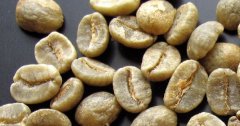
Columbia Coffee Raw Bean Colombia coffee green bean Columbia Coffee is one of the few plain coffee sold in the world under the name of the country. In terms of quality, it has won praise unmatched by other coffee. The country is the world's largest exporter of Arabica coffee beans, while robusta coffee is rarely grown. It is also the world's largest washed coffee bean (Washed)
Introduction to Colombian Coffee Raw Bean
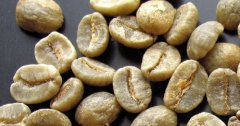
Columbia Coffee Raw Bean Colombia coffee green bean Columbia Coffee is one of the few plain coffee sold in the world under the name of the country. In terms of quality, it has won praise unmatched by other coffee. The country is the world's largest exporter of Arabica coffee beans, while robusta coffee is rarely grown. It is also the world's largest washed coffee bean (Washed)

Colombia coffee-producing region Andes foothills
The coffee-producing region of the country is located in the foothills of the Andes, where the climate is mild and the air humid. Colombia has three Cordilleras (sub-mountain system) running north-south, right into the Andes. Coffee is grown along the highlands of these mountains. The terraces provide diversity in climate, which means harvest season throughout the year, with different species at different times.

Description of flavor and taste of Medellin coffee beans in Colombia introduction of varieties in manor area
Description of the flavor and taste of Colombian Medellin coffee beans the varieties of Colombian coffee are mainly small-grain coffee. Plants are small trees or large shrubs, 5-8 m tall, usually much branched at base; old branches gray-white, nodes dilated, young branches glabrous, compressed. Leaves thinly leathery, ovate-lanceolate or lanceolate, 6-14 cm long and 3.5-5 cm wide, tip long acuminate, acuminate

Coffee producing area-Colombia
The largest producer of quality coffee in the world!
Basic knowledge of boutique coffee Colombian coffee producing area
[Columbia (Colombia) Coffee] is the second largest producer of coffee in the world, accounting for about 12% of the world's annual output, although far lower than the first Brazil's 30% to 35%, but most are high-quality mountain-washed beans. Central Colombia is divided into valleys by three north-south longitudinal mountains, of which the central and eastern mountains are the main producers of coffee. Coffee collection here

Coffee beans recommend the unique geographical environment of Colombian coffee.
Costa Rican coffee production has been in a tug of war with Vietnam in recent years, but two ○○ three to two ⊙⊙ was squeezed out by Vietnam in seven years, ranking the third largest producer in the world. Costa Rica is determined to regain its position as the second place, and the second ○○ has worked out a plan to increase production in six years, and is determined to increase its annual output from more than 12 million bags to more than 16 million bags within five years, and win back the world runner-up. In the past, Costa Rica paid more attention to the commercial soybean market.

General knowledge of Coffee Culture the Development History of Colombian Coffee
Coffee was first introduced to Colombia in 1808 when it was brought by a priest from the French Antilles via Venezuela. Today, the country is the second largest producer after Brazil, with an annual output of 13 million bags of 60 kg each, while Brazil produces 22 million bags a year. The status of coffee in Colombia can be seen in the following examples-all entering the
Coffee producing area Colombia
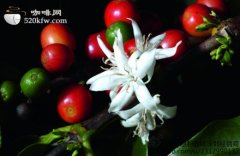
Coffee was first introduced to Colombia in 808 when it was brought by a priest from the French Antilles via Venezuela.

A brief introduction to the planting situation of Colombian boutique coffee beans with mild taste, geographical location, climate and altitude
At present, most of the Colombian manors adopt the mixed mode of 70% Kaddura and 30% Colombia, and the delicious Dibica has disappeared. The overall coffee variety configuration in Colombia is roughly 50% in Kaddura, 30% in Colombia and 20% in Tibica. With rich landforms, low latitudes and high elevations, Colombia has excellent conditions for the growth of boutique coffee. The Costa Rican coffee area lies between three and eight degrees north latitude, belonging to low latitude.

A brief introduction to the flavor, taste and aroma characteristics of Colombian boutique coffee beans with low-latitude coffee belt
Cauca province, Cauca department, the name comes from the Cauca River, Cauca River. Located in southwestern Colombia, it is an important producing area of Colombian boutique coffee together with Narino Department and Huila Department. Provincial capital: Popayan Popayan population: about 1368000 location: 00.58.54-03.19.04 north longitude 75.

A brief introduction to the description of flavor, taste and aroma characteristics of Colombian boutique coffee beans with rich landforms
The new breed [Colombia], which has the same name as Colombia, is a mixed-race coffee developed in the 1980s, with Kaddura and Timo ancestry, that is, the notorious Katim, but [FNC] insists that although Colombia is a direct line of Katim, its flavor is far more elegant than that of ordinary Kadim, because Colombia has washed away the moldy smell of strong beans after generations of reverse hybridization with Arabica, and the flavor is more like that of Katim.

Colombian coffee is one of the individual coffees sold in the world under the name of the country.
Coffee was first introduced to Colombia in 1808 when it was brought by a priest from the French Antilles via Venezuela. Today, the country is the second largest producer after Brazil, with an annual output of 13 million bags of 60 kg each, while Brazil produces 22 million bags a year. The status of coffee in Colombia can be seen in the following examples-all entering the

What is Colombian coffee? Where is the main producing area of Colombian coffee?
For more information on coffee beans, please follow the coffee workshop (Wechat official account cafe_style) in 1808, coffee was first introduced to Colombia by a priest from the French Antilles via Venezuela. Today, the country is the second largest producer after Brazil, with an annual output of 13 million bags of 60 kg each, while Brazil

A brief introduction to the treatment method of grinding degree and baking degree of Colombian boutique coffee beans with balanced taste
English name: Colombia huila Huilan Coffee Raw Bean Commodity Specification: 1000 grams Coffee country: Colombia handling method: washing Coffee Grade: 18 years of production: 2013 in the Huila,SI trading company recommended that farmers use biological control methods to control diseases and insect pests and maintain the cultivation of the old species of typica, as well as to continue the tradition of cultivation! Because Huila is located in the country

Introduction to coffee producing areas in Colombia
Colombia Coffee Origin: Jamaica Colombia coffee is one of the few unflavored coffees sold worldwide under its name. In terms of quality, it has earned accolades that no other coffee can match. The country is the world's largest exporter of arabica coffee beans, while robert coffee is rarely grown. It is also the world's largest exporter of washed coffee beans. with

A single cup of coffee sold in the world under the name of a country.
Coffee was first introduced to Colombia in 1808 when it was brought by a priest from the French Antilles via Venezuela. Today, the country is the second largest producer after Brazil, with an annual output of 13 million bags of 60 kg each, while Brazil produces 22 million bags a year. The status of coffee in Colombia can be seen in the following examples-all entering the

Introduction to Fine Coffee with rich flavor and taste in Lazmus Manor, Colombia
In 1501, the Spaniard R.de Bastidas first reached the northern coast of Colombia and founded the city of Santa Marta in 1525. In 1533, P.de Eredia established Cartagena. In 1535, G. Simone de Xada led the Spanish colonial army into the interior of Colombia, conquered the Chibucha, established the city of Bogota, and Colombia became a Spanish colony. At the beginning

Colombian boutique coffee-one of the most sold individual coffees in the world
Coffee was first introduced to Colombia in 1808 when it was brought by a priest from the French Antilles via Venezuela. Today, the country is the second largest producer after Brazil, with an annual output of 13 million bags of 60 kg each, while Brazil produces 22 million bags a year. The status of coffee in Colombia can be seen in the following examples-all entering the